Veza, tvScientific, and Qualified are the headline of 2025. See how the story continues in 2026:
For more than six decades, Norwest has helped founders navigate shifting markets, emerging technologies, and changing consumer needs. We’ve seen multiple innovation cycles play out, and recognize that certain early signals precede meaningful change.
Through a combination of deep expertise across enterprise technology, healthcare and consumer sectors and a global, multi-stage perspective, we stay closely attuned to where momentum is building and how these shifts may shape the year ahead.
In 2025, AI innovation and adoption accelerated at an unprecedented rate. We tracked how AI impacted leaders across the Marketing & Sales and People & Talent functions, and how it changed tech stacks across the office of the CFO and healthcare enterprises.
We watched as Congress passed the GENIUS Act, establishing the first regulatory framework for payment stablecoins, and setting the stage for Fintech 3.0.
Our team also celebrated medical milestones with two IPOs in our healthcare portfolio, FDA approvals for novel therapies, and breakthroughs that may shift the paradigm of disease treatment.
As we look toward 2026, our investment leaders shared the trends they believe will define the year. Here’s what they’re watching.
Modernizing Legacy Systems: From Fintech, to Climate Resilience and Public Infrastructure
We’ve seen moments where industries move from incremental improvements to foundational upgrades. In 2026, that shift is taking shape across climate resilience, public-sector technology, and global manufacturing, areas where modernization has been long overdue.
Stablecoins Will Quietly Power Everyday Commerce
 Jordan Leites (Venture) In 2026, stablecoins will power everyday commerce without consumers and merchants even realizing it, as fintechs shift billions in payment volume onto stablecoin infrastructure in a fundamental rewiring of the financial stack. Financial institutions that don’t adapt will be overtaken by products built on faster, cheaper, programmable systems.
→ See Jordan’s stablecoin market map on the infrastructure powering the next era of fintech.
Climate Resilience Will Call For a Holistic Approach: The Answer is Integrated Platforms
 Scott Mitchell (Growth Equity) Technology that bridges the physical and digital world to address climate resilience will accelerate. Protecting both the natural and built environment requires a holistic approach and 2026 will see true platform companies consolidate point solutions and build more integrated offerings. Policymakers, state and local officials, insurers, financial institutions, and technologists will all align to incentivize broader adoption of solutions that detect, protect, and prevent climate-induced disasters.
→ Read more about Scott’s partnership with Frontline Wildfire Defense.
India’s Fintech Ecosystem Will Continue to be One of the Fastest-Growing Global Markets
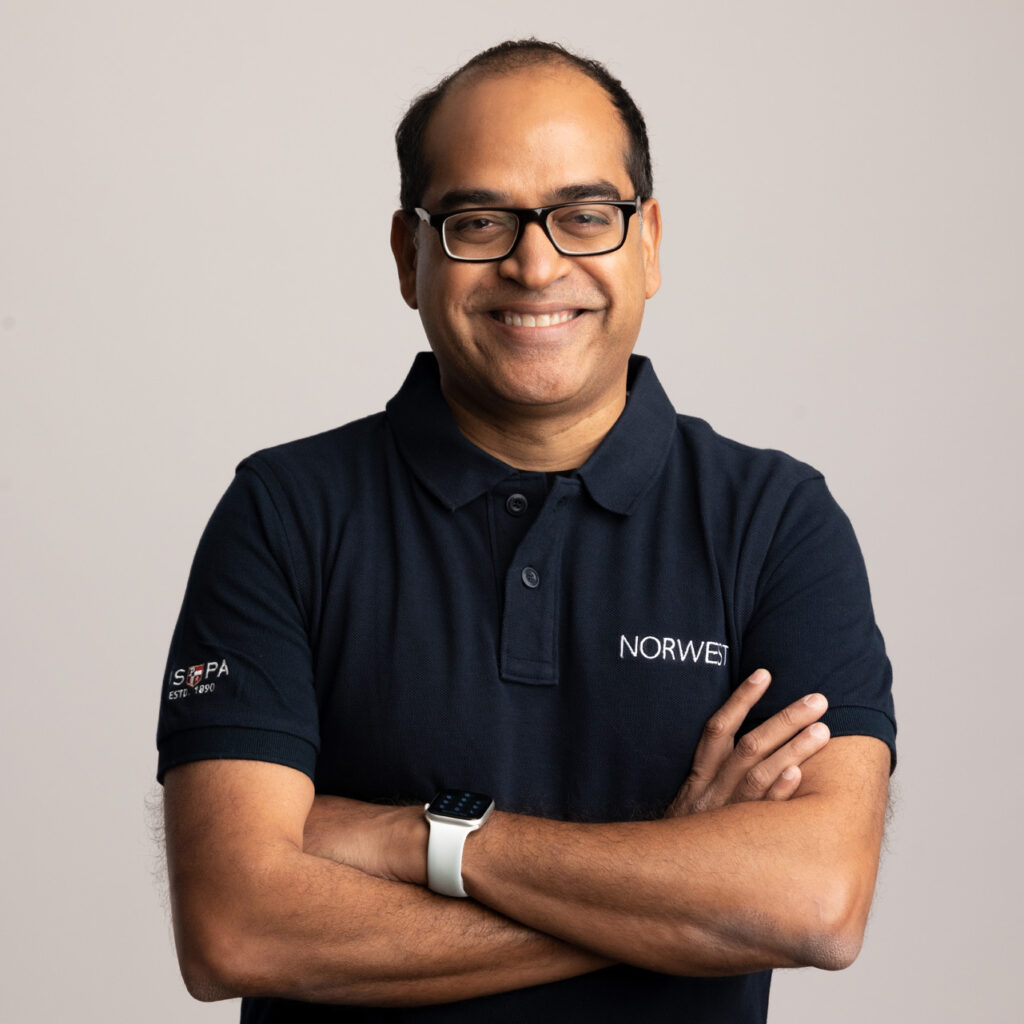 Niren Shah (Norwest India) India’s fintech ecosystem will remain one of the fastest-growing globally, with projected annual growth of more than 30% through 2029 as adoption expands across lending, digital payments, wealthtech, insurance technology, and neobanking. This momentum is being driven by a shift from digital access to digital intelligence as public digital infrastructure, open architecture, and AI embeds financial services into everyday consumer and business activities.
→ Read more from Niren on Norwest India’s 10 year partnership with Swiggy, resulting in the largest tech IPO globally in 2024.
Municipal Governments Will Accelerate the Modernization of Legacy Systems
 Chris Sondej (Growth Equity) Municipal governments will accelerate the replacement of legacy software and in many cases adopt cloud-based solutions for the first time, particularly within public works departments. Modern enterprise asset management (EAM) systems that unify assets, maintenance, work orders, and field operations while providing greater visibility into permitting, planning, and budgeting will become the new backbone of public works departments and improve the citizen experience.
→ Read more about Chris’ partnership with PSD Citywide.
Proactive Maintenance Will Replace Break-Fix Models Across Mission-Critical Infrastructure
 Connor Pike (Growth Equity) In 2026, owners and operators of mission critical assets such as commercial fleets, water and wastewater infrastructure, and industrial machinery, will accelerate the shift from break-fix repairs to proactive upkeep. Routine inspections and repair work will continue to provide the baseline, but the real unlock will be preventative maintenance programs with connected assets that turn one-off jobs into recurring and predictable essential service work. As every minute of downtime carries real financial and operational consequences, the move toward prevention will drive better performance and reliability.
→ Read more about Connor’s approach to new investment opportunities.
India Will Take a Larger Role in Global Manufacturing
 Shiv Chaudhary (Norwest India) India’s position in global manufacturing is set to grow in 2026. The country’s large talent base, competitive cost structure, and expanding workforce continue to make it an attractive option for companies evaluating long-term supply chain strategies. At the same time, ongoing geopolitical shifts are prompting multinationals to diversify where they source and produce goods. As a result, India is likely to play an increasingly meaningful role in global supply chains, with more manufacturers establishing or expanding operations in the country over the next year.
→ Learn more about Shiv’s experience and Norwest’s investments in Indian companies across sectors.
The Next Phase of AI: Less Guesswork, Real ROI
2026 may be a turning point for AI as it moves firmly into practical, value creation.
Small, Specialized Models Will Outpace Larger LLMs

Scott Beechuk (Venture) 2026 will mark the end of the ‘bigger is better’ era in AI. LLM and AI Agent memory will improve dramatically allowing small, specialized models with long-term memory to replace bloated LLMs in many agentic systems.
→ See Scott’s reflections on the journey with Qualified (to be acquired by Salesforce, upon close of transaction) and his recent AI investments in Kustomer and Pinkfish.
Adaptive, AI-Native Architectures Will Lead the Way in Security
 Yoni Braun (Venture) Security, both physical and cyber, is undergoing a fundamental transformation as AI shifts from a support function to a mission-critical automation layer. The volume and velocity of security events now exceed human capacity, demanding AI-based systems that can operate on the front lines. These systems are rapidly reaching enterprise-grade reliability, enabling real-time detection, response, and prevention. As environments grow more complex, only adaptive, AI-native architectures will keep pace. Security isn’t just catching up to AI anymore, it’s being rewritten by it.
→ Learn more about Norwest’s investment in Intezer and Lumana.
Home-Based Care Will Accelerate With Agentic AI

Irem Rami (Healthcare) In 2026, the next wave of healthcare transformation will happen at home. As reimbursement pressures mount, providers will increasingly turn to home-based care models that pair automation with intelligent, agentic AI workflows. These systems will not only streamline coding, staffing, and compliance but also reduce administrative burden and labor spend.
→ Read Irem’s thoughts on opportunities for innovators in the next wave of value-based care.
Enterprise AI Budgets Will Shift to Proven ROI

Dave Zilberman (Venture) In 2026, enterprise AI spend will shift from experimentation to execution. After 18 months of trying every AI-adjacent tool, buyers are now rationalizing budgets and doubling down only where there’s clear ROI. This will benefit infrastructure and security companies that use AI to make core operations more efficient, from GPU management to security automation. The winners won’t be the loudest ‘AI companies,’ but the ones that can prove, in dollars and hours saved, why a customer should care.
→ Read about our journey with Veza (to be acquired by ServiceNow upon close of transaction) and Dave’s investment in LlamaIndex.
Health & Wellness Innovation: From Daily Habits to Clinical Transformation
Transformative moments in healthcare often begin with converging forces: scientific breakthroughs, economic pressure, and new technologies that fundamentally change how care is delivered. In 2026, those forces will align once again.
Immune Therapies Will Move Towards Precise, Personalized Care
 Brian Matesic (Healthcare) Tailoring immune therapies for specific disease biology will create more precise treatments for autoimmune and inflammatory diseases. These include antibodies that modulate the immune system without suppressing it and engagers that recruit powerful T cells to specific targets. Together, these innovations mark a clear shift from broad immune suppression to truly personalized care.
→ Learn more about Brian’s investment in Mosanna’s patient friendly approach to sleep apnea.
Fiber Will Become the Breakout Consumer-Health Category of 2026

Lisa Wu (Venture) The next big consumer-health category isn’t new or exotic. It’s fiber.
Gut health is going mainstream, GLP-1s are reshaping eating habits, and 90 percent of adults still don’t get enough daily fiber. As a foundational nutrient for gut, heart, cognitive, and long-term health, even an extra 8g of fiber is statistically linked to reductions in all-cause mortality, colorectal cancer, and coronary heart disease.
The brands that approach fiber with science-forward messaging, innovation, and real consumer education to build daily habits will win this underserved market.
→ Read more of Lisa’s thoughts on science-backed health and wellness startups.
Clinical AI Adoption Will Move From Experimentation to Integration
 Suraj Shah (Healthcare) AI’s impact on healthcare administration is already well underway, but 2026 will be the year it moves decisively into the clinical domain. Expect to see meaningful adoption of AI systems that support clinicians directly like enhancing decision-making, streamlining patient assessments, and effectively extending the clinical team at a time when provider shortages continue to intensify. By year’s end, the conversation will shift from experimenting with clinical AI to figuring out how to integrate it responsibly and at scale across care pathways.
→ Read more about Suraj’s investments in Omada Health, Apreo Health and Galvanize Therapeutics.
What’s Ahead: 2026 and Beyond
As we’ve learned over six decades, the early signals matter. Some of these trends will accelerate quickly; others may unfold more gradually. But taken together, they point to a year shaped by modernization, new possibility, and meaningful impact.
As we enter our 65th year, we remain committed to partnering with founders and operators building what’s next with curiosity, conviction, and a long-term perspective.